


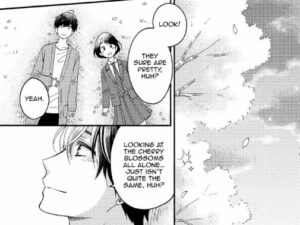
In Manga, Anime, and Webtoons there are often occasions when the protagonists either stand behind a cherry blossom tree and kiss while the petals are romantically falling down, or they go on a picnic to view the cherry blossoms specifically. Like in A condition called love for example:
If you want some recommendations, check out my completed romance webtoons list.
So where is this tradition coming from and what do Sakura and Hanami even mean?
Sakura (桜 or 櫻; さくら or サクラ in Japanese) means cherry blossom and is considered the national flower of Japan. The term often refers to ornamental cherry trees from the genus Prunus.
Cherry Blossoms (Sakura) in Manga: Hanami (花見) meaning
Hanami (花見) is a traditional Japanese custom of enjoying the beauty of blooming flowers, especially cherry blossoms (sakura). It is celebrated throughout Japan and can be both a personal and a social activity. While even a simple walk through a park during the cherry blossom season can be considered hanami, the tradition usually involves gathering with family, friends, or colleagues for a picnic under the blooming trees.
Historical Context
- Nara Period (710-794): The custom of hanami was first documented, but it was exclusive to the elite of the Imperial Court.
- Heian Period (794-1185): Hanami became more associated with cherry blossoms, gaining popularity among the aristocracy.
- Edo Period (1603-1868): The practice spread widely among the general populace. It became common to enjoy sake and food under the trees during hanami.
Modern Hanami Practices
Today, hanami remains a cherished tradition in Japan. Parks and gardens across the country become filled with people enjoying the blossoms and participating in various festivities. The celebration often includes:
- Picnics: Sharing food and drinks under the cherry trees.
- Night Viewing (Yozakura): Viewing illuminated cherry blossoms at night.
- Seasonal Foods: Special treats like sakura mochi and other cherry blossom-themed delicacies.
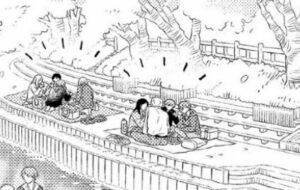
Here are some examples from my recent trip to Japan:


Cultural Significance
Hanami embodies the Japanese appreciation for the transient beauty of nature, reflecting the philosophical concept of “mono no aware” – the awareness of the impermanence of things. The cherry blossoms’ brief blooming period is a poignant reminder of life’s fleeting moments, making hanami a time for reflection and celebration of life’s ephemerality.
Sakura in Japan: symbolic meaning
When cherry blossoms begin to bloom, they mark the end of winter and the beginning of spring. Their short blooming period also reflects the idea of the transience of life, a theme that is often associated with Buddhist thought. Because the blossoms only last for a brief time each year, they remind people to appreciate the present moment.
In China, cherry blossoms are also associated with love, beauty, and sexuality. Japanese poetry likewise often draws on the symbolism of sakura, which shows that the meaning of cherry blossoms goes beyond a single interpretation and cannot be limited to Japan alone.

Cherry blossom petals are sometimes said to symbolize the souls of fallen samurai who faced death with courage and sacrificed their lives.
This symbolism was also used during World War II. Cherry blossoms were employed as a metaphor for the ideal of the Japanese warrior spirit, suggesting that soldiers should be ready to give their lives just as cherry petals fall at the height of their beauty. In some cases, cherry blossoms were even painted on the sides of airplanes before pilots embarked on suicide missions.
Which month is the cherry blossom in Japan?
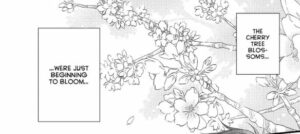
The cherry blossoms start to bloom first in the south around Kumamoto. In Tokyo, the cherry blossom season starts at the end of March. In Sapporo, in the North of Japan, you can view the cherry blossoms till the end of April and the beginning of March. So it depends on where you want to travel to. There is a very detailed travel guide for Japan, where you can check out the exact time for every region: Japan guide.
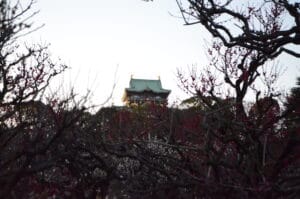
Around Osaka, there are several large parks with many flowering trees, including ume, or Japanese plum trees. The plum blossom is the national flower of China and even appears on some airplanes of China Airlines as part of the airline’s livery.
Like cherry blossoms, plum blossoms are also associated with the arrival of spring. In Japan, they are sometimes considered a protective symbol that can ward off evil, which is why plum trees have traditionally been planted in gardens near homes.